
For years, finance leaders in Nigeria have treated withholding tax (WHT) compliance as a necessary but routine task. It sat at the bottom of the priority list, handled quietly by back-office teams. As long as filings were made and receipts collected, many CFOs rarely paid attention.
But things have changed. In today’s environment of tighter regulation, faster audits, and more demanding investors, WHT is no longer a box-ticking exercise. It is a direct reflection of a company’s governance, credibility, and readiness for growth. This is why more CFOs and finance executives are now paying closer attention to WHT management, and why many of them are turning to the WHT Application as their tool of choice.
Why WHT Is on the CFO’s Radar
CFOs are under pressure to do more than balance the books. They are expected to reduce risks, build trust with regulators, and ensure the business is prepared for funding, partnerships, or expansion. WHT, when mismanaged, can become a roadblock to all of this.
Here are three reasons WHT now matters directly to CFOs:
- Regulatory risk: Late or incorrect remittances can attract penalties and delay Tax Clearance Certificates, slowing down core operations.
- Reputation risk: Sloppy WHT records signal poor governance to investors, auditors, and regulators.
- Relationship risk: Delayed WHT credit notes damage supplier confidence and can disrupt contracts.
For a CFO tasked with protecting the company’s credibility and ensuring smooth growth, ignoring WHT is no longer an option.
The WHT Application: More Than a Compliance Tool
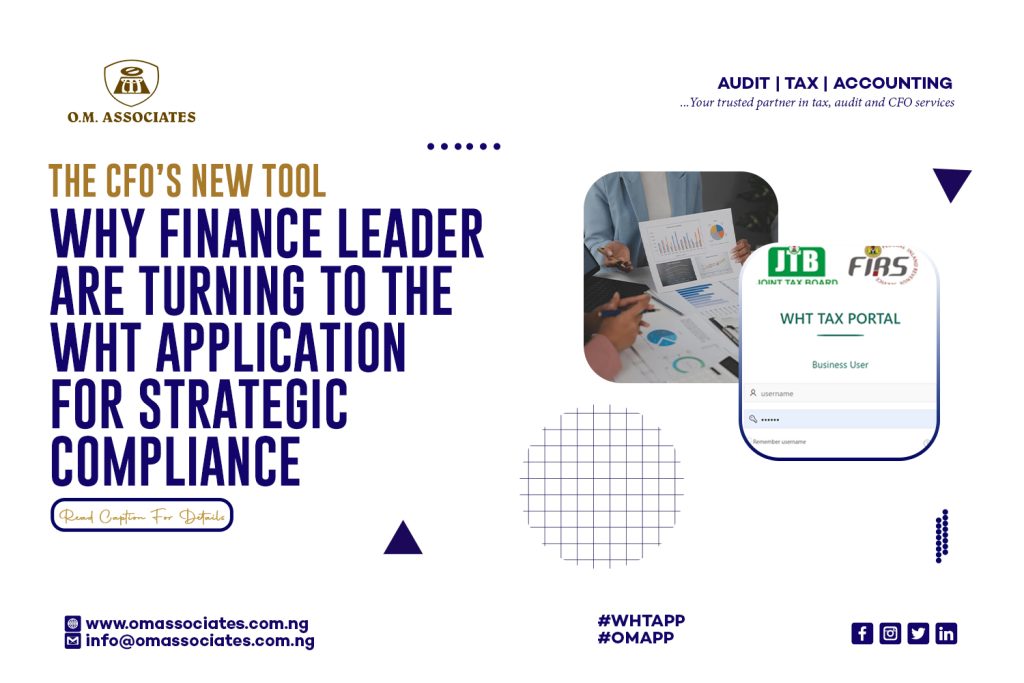
What makes the WHT Application attractive to CFOs is that it is not just about filings. It is about transforming compliance into a strategic advantage.
Here is why finance leaders are adopting it:
- Centralised Oversight
Instead of relying on scattered spreadsheets and multiple portals, CFOs get one platform to oversee all WHT obligations across states and FIRS. - Built-in Risk Control
The application automatically routes remittances to the right authority and validates entries against current rules. This reduces the risk of costly misfilings. - Audit Readiness
Every schedule, receipt, and certificate is stored digitally. CFOs no longer scramble to prepare for audits. They can present clean, organised records at any time. - Time and Cost Efficiency
What once required days of manual work can now be completed in hours. This frees finance teams to focus on analysis and planning rather than firefighting compliance. - Strategic Credibility
By ensuring WHT is always in order, CFOs build trust with regulators, suppliers, and investors. This trust is often the difference between stalled growth and unlocked opportunities.
A CFO’s Perspective
Think of the WHT Application as a dashboard for compliance. Instead of asking “Did we file this?” or “Where is that receipt?”, CFOs can log in and see the entire picture at once. They can monitor timelines, check outstanding obligations, and ensure suppliers receive their credit notes on time.
For companies preparing for audits, investor due diligence, or regulatory reviews, this level of visibility is invaluable. It turns what used to be a blind spot into a point of strength.
Why Strategy and Technology Must Go Together
It is important to note that the WHT Application is not a magic switch. For CFOs, technology works best when paired with a clear compliance strategy.
- Set policies: Define clear internal processes for deductions, remittances, and recordkeeping.
- Train teams: Make sure finance staff understand not just how to use the tool, but why WHT compliance matters.
- Monitor regularly: Use the app to track performance and address gaps before they become issues.
- Review annually: Align your WHT approach with changes in Finance Acts and tax regulations.
With a strategy in place, the WHT Application becomes more than software. It becomes part of the company’s governance framework.
The Bigger Picture for Finance Leaders
CFOs are always thinking ahead. They know that tomorrow’s opportunities depend on today’s credibility. In Nigeria’s reforming tax environment, where regulators are becoming more digital and investors more demanding, WHT is a small detail with a big impact.
By adopting the WHT Application, CFOs are not just making life easier for their finance teams. They are signalling to stakeholders that the business is disciplined, compliant, and ready for growth.
Final Thoughts
The role of the CFO has always been about more than numbers. It is about protecting the company’s reputation, reducing risks, and creating the conditions for growth. WHT compliance may seem like a small detail, but it is one that can make or break trust with regulators, suppliers, and investors.
The WHT Application gives finance leaders the visibility, control, and confidence they need to turn WHT from a burden into a strategic advantage. For Nigerian CFOs who want to stay ahead, this is no longer a nice-to-have. It is becoming a must-have.