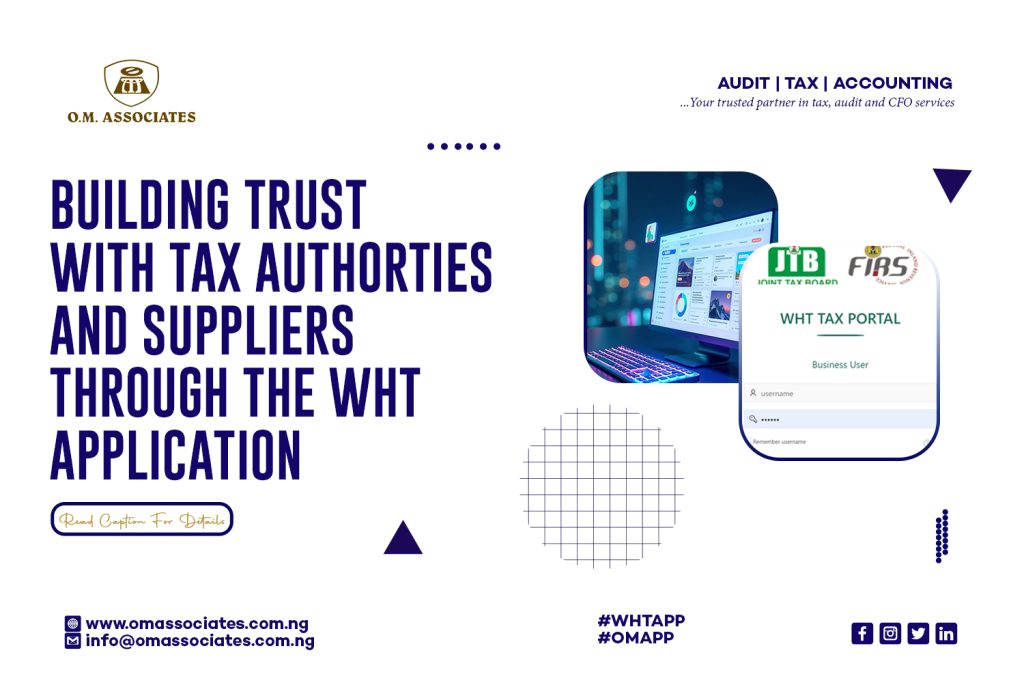
Trust is one of the most valuable currencies in business. Without it, relationships with regulators, suppliers, and even investors can quickly break down. In Nigeria, withholding tax (WHT) compliance is one of the areas where that trust is constantly tested.
Every late filing, every error in remittance, and every delay in issuing WHT credit notes chips away at credibility. Regulators begin to see a business as unreliable. Suppliers lose confidence and may think twice before extending credit or entering long-term agreements. Investors ask hard questions during audits or due diligence.
This is why the WHT Application is more than a compliance tool. It is becoming a trust-building platform. By centralising WHT processes, reducing errors, and ensuring timely remittance, it helps businesses demonstrate discipline and strengthen relationships that matter.
The Compliance-Trust Connection
At first glance, WHT compliance looks purely transactional: deduct, remit, and file. But behind every step lies a trust factor.
- Regulators want assurance that businesses are deducting and remitting correctly. Any gap looks like negligence or avoidance.
- Suppliers depend on timely credit notes to offset their own tax obligations. Delays can leave them exposed and frustrated.
- Investors and partners look for clean compliance records as proof that a business is well run.
In other words, compliance is not just about ticking boxes. It is about showing stakeholders that your business is reliable, transparent, and responsible.
Where Trust Breaks Down
Many Nigerian businesses struggle to maintain this trust because of the challenges built into the WHT system.
- Multiple authorities: The split between FIRS and SIRS creates room for misfiling.
- Fragmented platforms: Each state has its own processes and templates.
- Manual processes: Spreadsheets, paper records, and physical visits increase the risk of delays and errors.
- Disorganised records: Missing receipts or credit notes make audits stressful and damage credibility.
When these problems pile up, regulators see red flags, suppliers get frustrated, and investors grow cautious.
How the WHT Application Builds Trust
The WHT Application changes this dynamic by bringing structure, speed, and accuracy into the process.
1. Confidence with Regulators
The app automatically distinguishes between FIRS and state remittances. This reduces the risk of misfiling and ensures compliance with the latest rules. Regulators appreciate businesses that file correctly and on time. Over time, this builds a reputation for reliability.
2. Stronger Supplier Relationships
Suppliers want their WHT credit notes quickly. With the app, credit notes are tracked and stored digitally, making it easier for businesses to issue them without delay. Suppliers gain confidence that working with your business will not create tax headaches for them.
3. Audit-Ready Records
Every remittance, schedule, and certificate is stored centrally. When auditors or investors request records, they can be produced immediately. This builds trust that the business is well governed and transparent.
4. Faster Resolution of Issues
Because the app creates a digital trail, errors can be identified and corrected quickly. Regulators and suppliers see that problems are not ignored but resolved with accountability.
Why This Matters for Business Growth
Trust is not a “soft” benefit. It has a direct impact on growth.
- Faster approvals: Clean WHT records make it easier to secure Tax Clearance Certificates and other regulatory approvals.
- Better supplier terms: Suppliers are more likely to extend credit or enter long contracts when they trust your processes.
- Investor confidence: During due diligence, well-organised WHT records reduce red flags and make funding discussions smoother.
- Reputation advantage: In industries where compliance is often messy, being known for reliability sets you apart.
From Compliance Burden to Relationship Builder
The biggest shift the WHT Application creates is mindset. Businesses that once saw WHT as a burden are now seeing it as a relationship builder. Every timely filing becomes proof of reliability. Every prompt credit note strengthens a supplier bond. Every audit-ready record builds investor confidence.
Instead of compliance draining trust, it becomes the foundation of trust.
The Bigger Picture
Nigeria’s tax system is becoming more digital and more transparent. Regulators expect businesses to adapt. Suppliers expect faster, more reliable processes. Investors expect proof of discipline.
The WHT Application is not just a tool for today. It is part of the bigger shift toward governance that combines technology with accountability. Businesses that adopt it early are positioning themselves not only for smoother compliance but also for stronger long-term relationships.
Final Thoughts
Trust is built on consistency, accuracy, and transparency. The WHT Application helps Nigerian businesses deliver all three. By using it, companies can move from firefighting compliance issues to building lasting credibility with regulators, suppliers, and investors.
In business, credibility is everything. The WHT Application gives companies a practical way to protect it, grow it, and use it as a competitive edge.