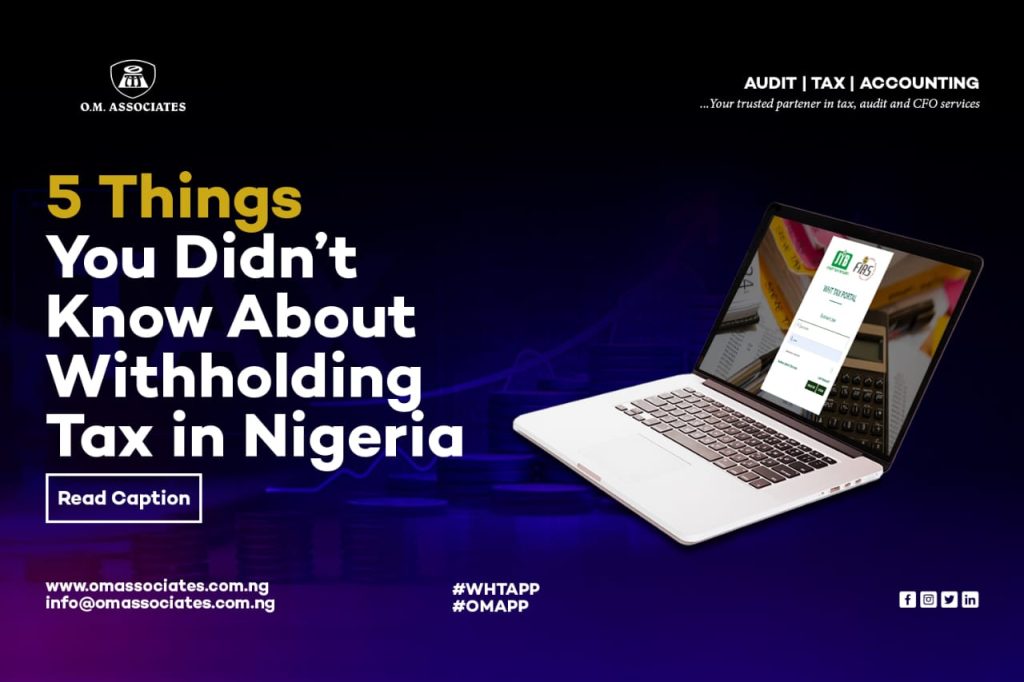
Withholding tax (WHT) is an essential component of Nigeria’s tax system, yet many people misunderstand its purpose, laws, and implications. Whether you’re a business owner, a contractor, or simply someone curious about taxes, it’s vital to understand how withholding tax works and how you can remain compliant. Here are five key things you probably didn’t know about withholding tax in Nigeria, along with how the OMA Withholding Tax App (WHTAPP) makes adherence to these laws seamless.
1. Withholding Tax is Not a Separate Tax
Contrary to popular belief, withholding tax is not an additional tax; it is an advance payment of your income tax. The idea is to ensure that taxes are collected at the source of income.
For instance, when a business pays a contractor for services rendered, the business is required to deduct a portion of the payment as withholding tax and remit it to the relevant tax authority. The contractor can later offset this amount against their income tax liability for the same year.
This system ensures compliance and reduces the risk of tax evasion by collecting taxes early. WHTAPP simplifies this process by enabling businesses to calculate, deduct, and remit withholding taxes accurately, reducing the administrative burden.
2. Withholding Tax Rates Vary by Transaction Type
In Nigeria, the withholding tax rate is not fixed. It depends on the nature of the transaction and the taxpayer’s residency status.
For example:
- Individuals:
- Rent: 10%
- Dividends: 10%
- Professional fees: 5%
- Companies:
- Rent: 10%
- Dividends: 10%
- Professional fees: 10%
Non-residents may be subject to higher rates in some cases, especially if there are no double taxation agreements (DTA) in place. Staying on top of these rates can be challenging for businesses, particularly those with diverse transactions. WHTAPP includes automated rate updates and guides users through the correct calculations, ensuring compliance with current regulations.
3. Some Transactions Are Exempt from Withholding Tax
Not all payments are subject to withholding tax in Nigeria. Exemptions exist to encourage economic activities in certain sectors or to reduce the tax burden on particular types of income.
Examples of exemptions include:
- Dividends paid to shareholders by a company under pioneer status.
- Reimbursement payments.
- Payments to government ministries or agencies.
Understanding these exemptions can save your business from overpaying or deducting unnecessary taxes. With WHTAPP, users can access a database of tax laws and exemptions, making it easy to determine when withholding tax does or does not apply.
4. Penalties for Non-Compliance Are Severe
Failure to deduct or remit withholding tax carries serious consequences in Nigeria. The penalties include fines, interest on the unpaid tax, and even legal action.
For example, a company that fails to remit WHT may face penalties of 10% of the amount not remitted, plus interest at the Central Bank of Nigeria’s prevailing lending rate. Such penalties can significantly affect cash flow and damage a company’s reputation.
WHTAPP helps businesses avoid these pitfalls by sending timely reminders for remittance deadlines. The platform also offers a centralised dashboard for managing payments, ensuring no transaction is overlooked.
5. Filing WHT in Multiple States Can Be Overwhelming
Nigeria has a complex tax system with 36 states and the Federal Capital Territory, each having its own tax authority. Businesses operating across multiple states often struggle with varying remittance procedures, forms, and requirements.
For instance, a company paying contractors in Lagos, Kano, and Rivers State must navigate the different rules and expectations of each state’s tax authority. Without a streamlined system, this can lead to delays, errors, and compliance issues.
WHTAPP addresses this challenge by providing a unified platform where users can file and remit withholding taxes for all states and the Federal Inland Revenue Service (FIRS). This not only saves time but also ensures consistency in documentation and filing practices.
How WHTAPP Simplifies Withholding Tax Compliance
A One-Stop Solution
WHTAPP eliminates the need for multiple manual processes, offering a centralised platform for managing all withholding tax obligations. Users can calculate deductions, generate reports, and make payments to any tax authority in Nigeria—all from the comfort of their workspace.
Real-Time Updates
Tax regulations in Nigeria are subject to change. WHTAPP is regularly updated to reflect the latest laws and rates, ensuring users remain compliant without having to track changes themselves.
Ease of Access
Available online via the Joint Tax Board (JTB) website, WHTAPP is accessible to businesses of all sizes. The user-friendly interface makes it easy for both small and large organisations to manage their withholding tax processes efficiently.
Training and Support
O.M. Associates has conducted extensive training sessions to ensure users understand how to maximise the benefits of WHTAPP. Whether you’re a beginner or an experienced tax professional, the app’s support team is always on hand to assist with any challenges.
Conclusion
Withholding tax compliance in Nigeria doesn’t have to be overwhelming. Understanding key facts about WHT laws, rates, and exemptions is the first step toward simplifying your tax obligations. With tools like the OMA Withholding Tax App (WHTAPP), businesses can navigate these complexities with ease, ensuring timely payments and avoiding costly penalties.
Start your journey to hassle-free tax compliance today by exploring the full capabilities of WHTAPP. Simplify your processes, ensure compliance, and focus on what matters most—growing your business.